The vice provost for graduate education and international affairs (VPGEIA) oversees Washington University’s entire graduate student community of over 8,900 graduate and professional students at the university’s eight schools. The VPGEIA serves as a key member of the provost’s core leadership team, advises the provost on graduate education trends, programming, strategic planning and policy, and works closely with school deans and vice-deans to advance graduate and professional education across the university. The vice provost for graduate education and international affairs is responsible for administering several university-level fellowships and overseeing The Graduate Center.
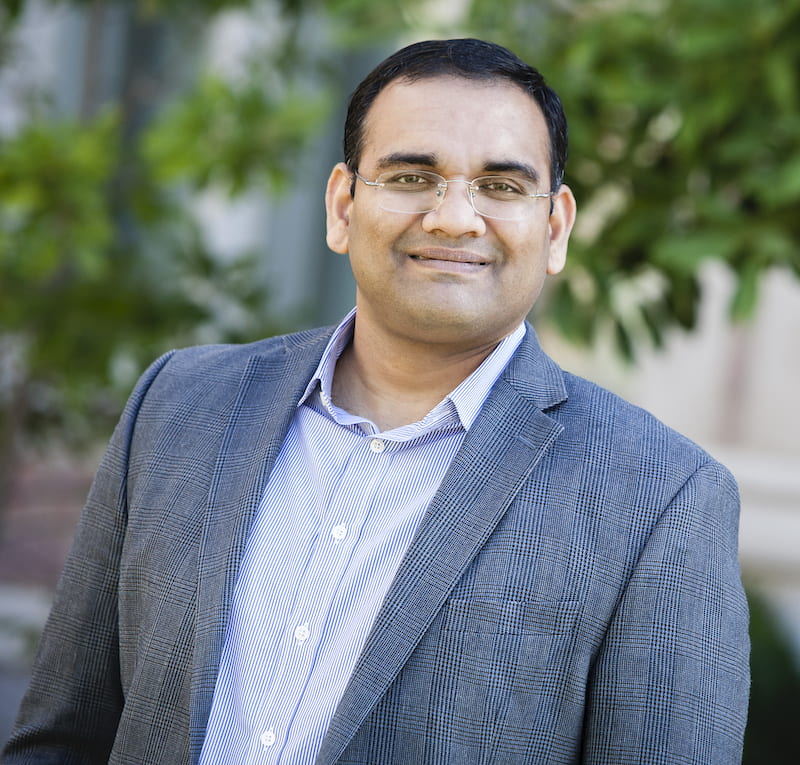
“Graduate education represents one of the university’s highest priorities and offers exciting potential for us to grow in distinction as an institution of research and higher learning. Vijay has a deep understanding of the challenges and opportunities in graduate education, providing strong leadership, advancing ongoing initiatives and developing partnerships across the university.”
Provost Beverly Wendland



WashU is a world leader in graduate, professional and postdoctoral education, awarding hundreds of PhD, MD and master’s degrees annually. As one of the largest research institutions in the country, we are committed to providing a graduate school experience filled with knowledge, discoveries and intellectual inquiry. This includes exploring multiple disciplines as well as learning from faculty who care deeply about the subjects they study and the students they teach in our community of bold, independent and creative thinkers. We prepare the leaders of tomorrow, enhance the culture of entrepreneurship and innovation, and improve the global quality of life through groundbreaking discoveries by fostering robust collaboration between faculty and students.
Our university attracts graduate and professional students from more than 100 countries and all 50 states. Our graduate students are heavily supported by faculty and staff throughout their academic journey, enabling them to focus on academics and participate in intellectual activities outside of the classroom.
Browse through our web pages to learn more about current programs and initiatives that the VPGEIA supports. For additional information, please contact our office at vpge@wustl.edu.